
Best coastal walks on the Isle of Skye
Why island conservation volunteering is worth the ferry fare
Britain's islands carry some of the most fragile habitats in the country: machair grasslands in the Hebrides, puffin burrows off Pembrokeshire, dune systems on the Northumberland coast, and shoreline heath on the Channel Islands' cousins in the Solent. These places are also thin on paid staff. Most of the work that keeps them in good condition — counting, clearing, repairing, recording — is done by volunteers, often people who arrived on a ferry with a rucksack and a week to spare.
You do not need a biology degree. You need waterproofs, decent boots, patience with weather, and a willingness to be useful for a few hours at a time. Here is what that actually looks like around the UK coast.
Beach cleans: more methodical than you might expect
A beach clean on an island is rarely a casual wander with a bin bag. Groups usually work to a falling tide, on a schedule shaped by the ferry timetable, so the session might run two or three hours and cover a single bay thoroughly rather than a whole coastline loosely.
Expect to be given gloves, a picker, and a data sheet. The count matters as much as the collection: how many plastic bottles, how many metres of fishing rope, how much expanded polystyrene. Some teams sieve sand for nurdles, the lentil-sized plastic pellets that wash up in vast numbers after spills. Everything is weighed, logged, and sorted — hard plastics for recycling where facilities allow, the rest for disposal, which on a small island often means shipping it back on the same boat that brought you.
- Take gloves that fit. Loose ones cause blisters within an hour.
- Flag sharps immediately. Needles and broken glass go in a separate container, not a bag.
- Lift with your legs. Fishing crates full of wet sand are far heavier than they look.
- Never turn your back on the sea. Rogue waves on Atlantic-facing shores are a genuine hazard.
Habitat surveys and practical land work
The unglamorous tasks keep island ecosystems functioning. You might spend a morning planting marram grass to stabilise a blowout in the dunes, or pulling invasive species such as cotoneaster or sea buckthorn out of coastal heath where they smother native plants. Drystone wall repairs, boardwalk replacement, and clearing drainage grips on peatland are common too.
Survey work suits people who like detail. Fixed-point photography involves standing in an exact spot, matching a photograph taken years earlier, and recording how the vegetation has shifted. Quadrat surveys mean laying a square frame on the ground and listing every plant species inside it. Both are slow, oddly absorbing, and genuinely valuable — a decade of consistent records tells land managers whether grazing levels or visitor pressure are changing the site.
Wear long sleeves and trousers even in warm weather. Ticks are present on many island heaths, and bracken and gorse scratch. Check yourself properly at the end of the day.
Wildlife monitoring days
This is where island volunteering gets memorable. Grey seal counts happen in autumn, when mothers and white-coated pups haul out on sheltered beaches. Volunteers work from a clifftop with a telescope, counting at low tide and keeping well back — disturbance can cause a mother to abandon a pup.
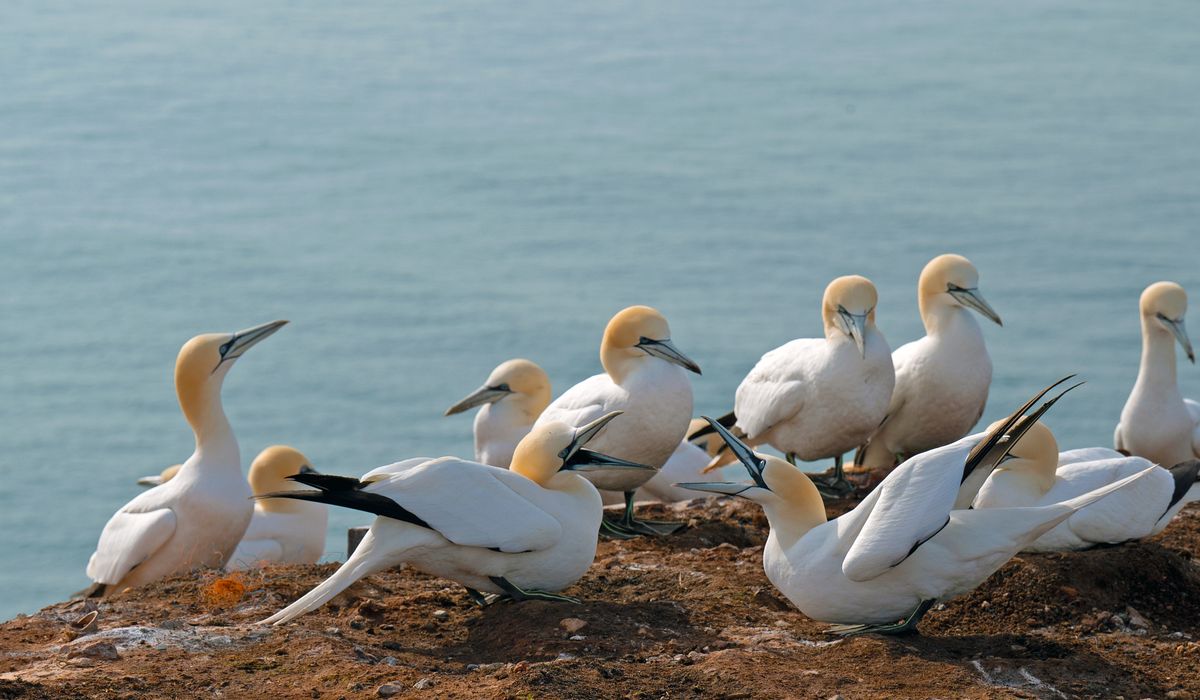
Seabird work is usually spring and early summer. Counting puffins on a cliff ledge, mapping Manx shearwater burrows by playing calls and listening for replies, or helping a licensed ringer process chicks are all tasks that rely on volunteers turning up year after year. Cetacean watches run from headlands in fine weather: you record sea state, visibility, and every sighting over a fixed period, which is what makes the data usable rather than anecdotal.
Elsewhere, you might walk a butterfly transect, check mink rafts on a loch shore, or survey strandline beetles on a shingle beach. Training is provided on the day, and records usually feed into national recording schemes.
Finding a project and planning your trip
Island projects are advertised in unglamorous places: community hall noticeboards, ferry terminal information points, island ranger offices, and the volunteer pages of local wildlife trusts and national park authorities. Residential weeks fill up fastest between April and September, so enquire by late winter if you want a summer placement. Day sessions are easier to join and often welcome visiting families.
Practical points worth knowing:
- Ferries and weather rule everything. Build a spare day into your plans on each side of a booking.
- Accommodation is the main cost. Some projects offer basic bunkhouse space for a modest contribution; otherwise book early, as island beds are limited.
- Bring: waterproof jacket and trousers, wellingtons, work gloves, sun cream, midge repellent for west coast summer, a refillable bottle, and binoculars if you own them.
- Age limits apply to some tasks — under-18s generally need a guardian present, and certain survey roles require licensed supervision.
Being a good guest on a small island
Island communities are small, and volunteers are noticed. Buy your food and fuel locally, ask before photographing people or property, shut gates, and keep dogs on leads or leave them at home. Learn how to say the place name properly; it is appreciated far more than you would think.
Keep to paths during nesting season, never approach seals or hauled-out wildlife, and take every scrap of litter off the beach, including the bits that are not yours. The best volunteers come back the following year — and by then, the ranger will remember your name and hand you the clipboard with the difficult transect on it.
LEAVE A COMMENT